

Panu Rytkönen: Metaphors from the battlefield of Finnish visual art, sculptures
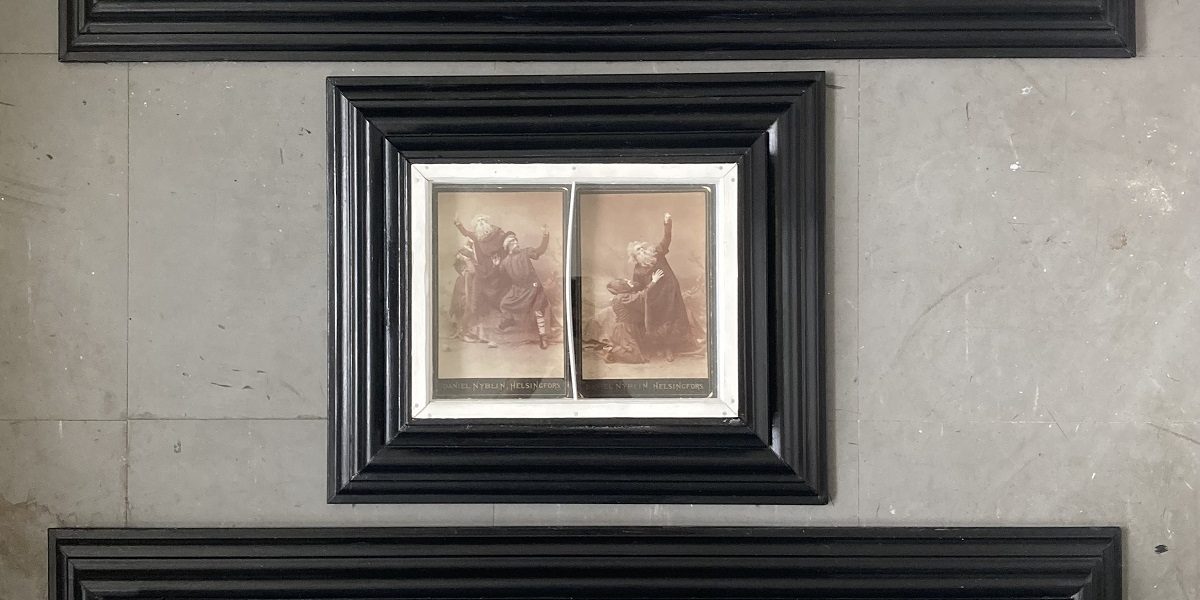
For us, accustomed to a victorious advance, the prospect of such a large unit being encircled seemed highly improbable. We could not believe that our journey would end there.
Heino Graf Vitzthum, Staff Officer, 60th Infantry Division
—-----------------------------------------------
Time at the front numbs the infantrymen. Take, for instance, when an anti-aircraft shell lands directly in the trench. Hardly anything remains of the man beside you when a grenade or artillery shell strikes him head-on. Nothing but shreds flying through the air. That is war. That is the reality of war.
Erich Miethe, Supply Corps pilot
—-----------------------------------------------
It is incredible what one has to endure in the cold. Rats and other animals can burrow into the ground for shelter. But man… Man cannot.
Hans Rostewitz, Officer, 76th Infantry Division
—-----------------------------------------------
Frostbite on the feet was the most common. Frostbite also affected hands, noses, cheeks… It caused a peculiar odor that was hard to bear. The worst cases of frostbite should have been amputated. When frostbitten flesh rots, toxins spread to the rest of the body. Without medical treatment, that was the end of it. The person dies. It is impossible to imagine.
Albrecht Appelt, Officer, 305th Infantry Division
—-----------------------------------------------
The sensation of hunger? People don't know it anymore these days. When someone says they’re hungry, it isn’t even true. To me, hunger is something else entirely.
Franz Baumeister, 71st Infantry Division
—-----------------------------------------------
The cellars were filled with wounded men—feverish and dying. They already reeked like corpses and had soiled themselves with urine and feces. The stench was strong and acrid. The cellars were like morgues where the bodies were still alive for a little while longer.
Hans Mroczinski, 295th Infantry Division
—-----------------------------------------------
They brought in a wounded man whose arm was hanging by just a few shreds of skin. Had I simply let him lie there, I would have given up in utter hopelessness. I would have given up on him. I could not have done that. I sterilized my instruments and amputated his arm. He did not live much longer—as was the case with so many others—but leaving him untreated would have meant giving up. One cannot do that.
Horst Rocholl, Medical Officer
—-----------------------------------------------
Thousands of unburied soldiers lay in the snow. Thousands upon thousands. Our route took us right past them. The wind just howled overhead. At moments like that, something inside a person shatters—and it can never be mended.
Gerhard Münch, Officer, 71st Infantry Division
—-----------------------------------------------
I saw with my own eyes how our soldiers butchered a fairly well-nourished and recently deceased supply officer. The lungs and liver were cut out... I have to say, a great many of those emaciated people were no longer fully in their right minds.
Gerhard Dengler, Officer, 3rd Motorized Infantry Division
—-----------------------------------------------
Next to the bunker, a pile of corpses as high as a house had been stacked up. No one had the strength to bury them anymore. That is why the bodies… The temperature was constantly at least 20 degrees below zero. The frozen bodies were simply stacked on top of one another. That is how a massive pile of corpses came to be there, next to the field hospital.
Bernd Freytag von Loringhoven, Officer, 16th Panzer Division
—-----------------------------------------------
The general commanding my Panzer corps had received orders to fly out. I drove him to the airfield in the last remaining cross-country vehicle. He had already said his goodbyes to us. I am still moved when I think of it. He could not utter a single word. He was so… He could not grasp the situation. And to this day, I do not understand my own behavior. I did not dare—nor did it even cross my mind—to ask: "General, couldn't you take me with you?"
Manfred Gusovius, Staff Officer, 14th Panzer Division
—-----------------------------------------------
The plane landed. Medics were preparing to load us wounded onto the aircraft. Then, the following happened: four or five high-ranking officers arrived—well-fed and wearing white fur coats, each with a submachine gun prominently displayed. These high-ranking gentlemen were accompanied by two adjutants. Clad in their furs and looking well-nourished, they declared that they had orders to depart. The doctor on board stated that the plane had come to evacuate the wounded. At that point, they threw the doctor out of the aircraft. I saw it with my own eyes. The doctor ended up lying there on the ground with us. The officers boarded the plane and forced the pilot to take off without taking a single wounded man along. This is the truth.
Günter Mai, 60th Motorized Infantry Division
—-----------------------------------------------
The exhibition has been supported by the Finnish Cultural Foundation.
Free entrance